 by marketing30/01/2026
How to Maintain Your Car Battery and Avoid Unexpected Breakdowns
How to Maintain Your Car Battery and Avoid Unexpected Breakdowns
The battery plays a critical role in a vehicle’s operation. If it cannot supply power properly, essential systems—including the engine and ignition—may malfunction or fail completely. Proper battery maintenance is therefore essential to ensure reliable vehicle performance and to prevent unexpected breakdowns.
Below are several practical tips to help extend battery life and keep your vehicle running smoothly.
Regularly Inspect the Battery Exterior
Periodically check the battery casing for cracks, bulges, or other physical damage. A damaged battery may leak corrosive electrolyte, which can harm surrounding components and pose safety risks. If any cracks or leaks are found, the battery should be replaced immediately.
Check Battery Cables and Connections
Ensure that the battery cables are securely connected to the terminals. Loose or corroded connections can interrupt power flow and cause starting problems that may appear similar to a dead battery. Tighten any loose connectors and make sure the terminals are clean and firmly attached.
Ensure the Battery Is Properly Secured
Check whether the battery is firmly fixed in the battery tray. If the battery is loose, tighten the mounting bolts promptly. Excessive vibration during driving can damage internal battery components and significantly shorten battery lifespan.
Clean Corrosion from Battery Terminals
If you notice white, green, or bluish powdery deposits on the battery terminals, this indicates corrosion. Use a wire brush along with a baking soda (sodium bicarbonate) and water solution to clean the terminals. Removing corrosion ensures good electrical contact between the battery and the cables, improving starting performance.
Avoid Over-Discharging the Battery
After turning off the engine, avoid using electrical equipment for extended periods, such as:
-
Audio and infotainment systems
-
Lighting
-
Air conditioning
-
Other electronic accessories
If electrical devices must be used, it is best to start the engine so power is supplied by the alternator rather than draining the battery.
Use Proper Starting Practices
Starting the engine draws a high current from the battery. Frequent or prolonged cranking can cause serious battery damage. Each starting attempt should not exceed 5 seconds. If the engine does not start, wait 10–15 seconds before trying again. This allows the battery to recover and helps prevent excessive discharge.
Prepare for Emergencies with a Jump Starter
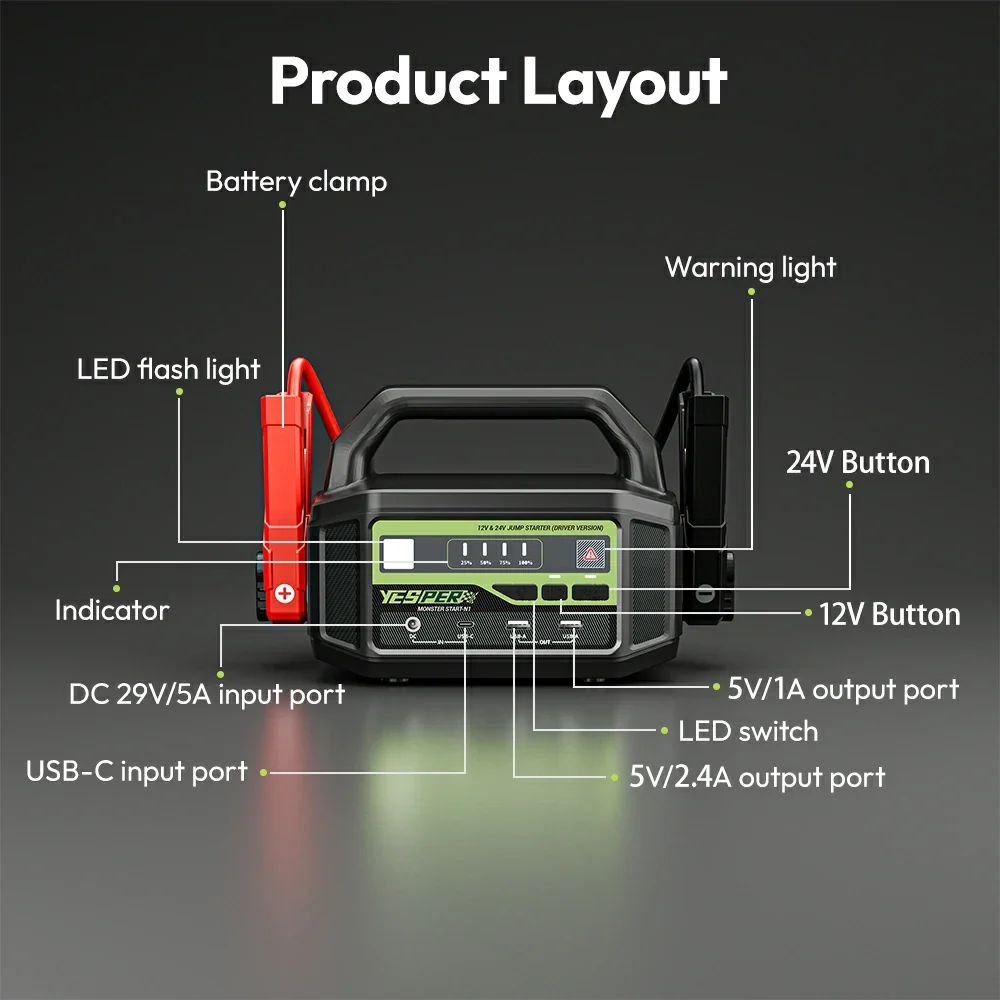
Even with proper maintenance, batteries can fail unexpectedly—especially in extreme weather or after long periods of inactivity. Preparing a portable jump starter, such as a YESPER jump starter, can help you handle emergencies with confidence.
When the vehicle cannot start due to a dead battery or roadside breakdown, simply connect the jump starter to the battery to restart the engine. Once the engine is running, the alternator will recharge the battery, allowing you to continue your journey safely.
Small Size, Big Peace of Mind
A jump starter takes up minimal space in your vehicle, yet the power and security it provides are invaluable. In critical moments, it can mean the difference between being stranded and getting back on the road quickly.